
Every String Managed Independently
In a string-structure BESS, each battery string connects to its own modular PCS. Every string is an independent unit on the DC side: charging and discharging are independent, short-circuit currents stay small, and a branch fault never affects the operation of the whole system.
- High Availability
- Long System Lifespan
- Simple O&M
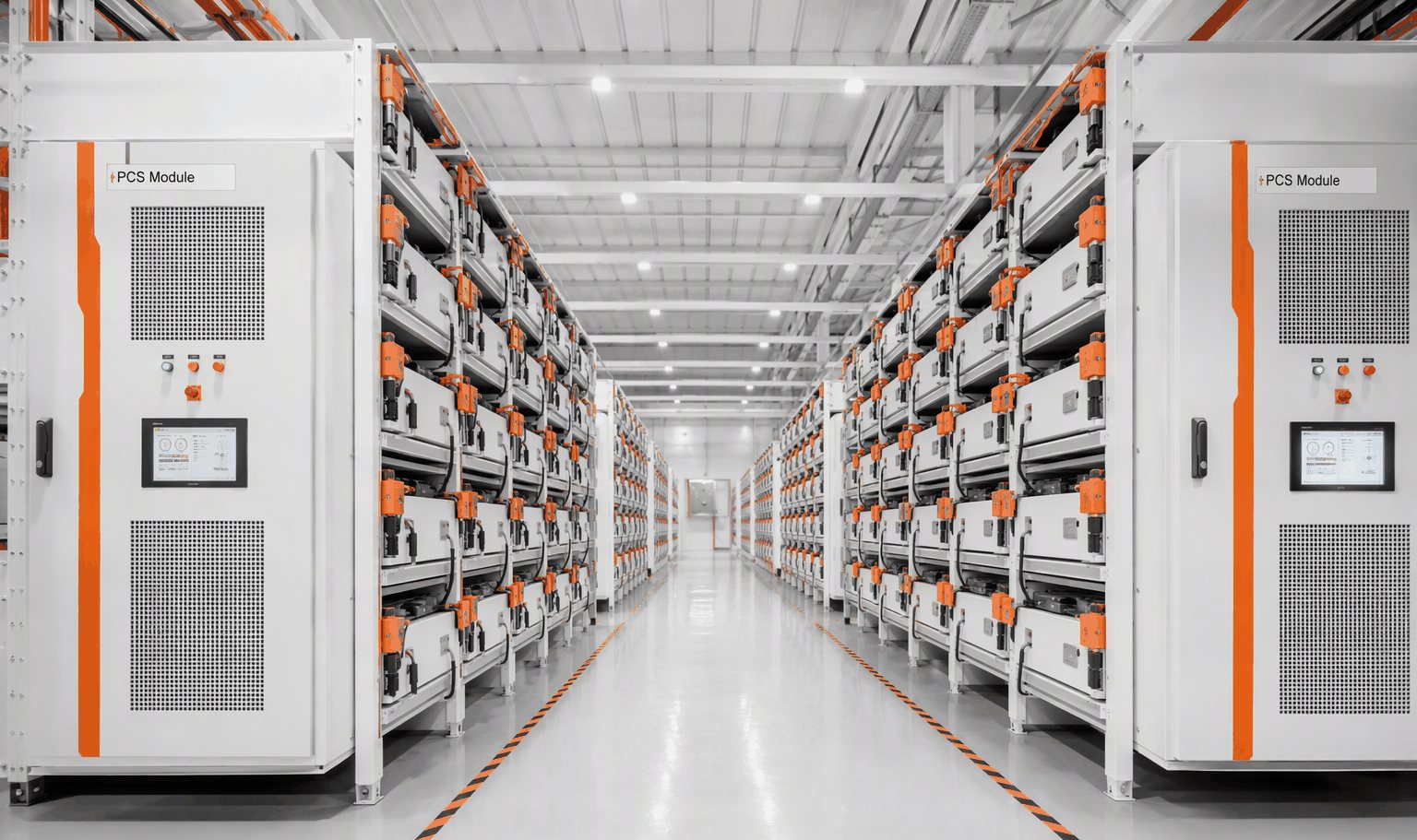
One String Down, Ninety Percent Still Earning
In a centralized BESS, one PCS fault takes the whole block offline. In Marwell’s string architecture, every string is an independent unit — a fault means proportional derating, never a blackout.
| Centralized | Marwell String Architecture | |
|---|---|---|
| Fault impact | Whole block offline until repaired | Only the affected string derates — proportionally |
| Short-circuit current | High at the common DC bus | Small — strings are DC-isolated from each other |
| Circulating currents | Bias / loop currents between parallel strings | None — complete DC isolation between strings |
| Capacity expansion | New batteries must match aged strings | Add strings independently, old and new can mix |
| Maintenance | System-level shutdown for service | Service one string like a single standalone unit |
Available, Reliable, Accountable
Available Capacity Guarantee
Complete DC isolation between strings eliminates bias and loop currents. A degraded string reduces output proportionally — a manageable derating, never a system-wide failure.
Extended Operating Life
With no circulating or bias currents between strings, and proper balancing and protective design, a string BESS delivers a longer system-level life expectancy than DC-bus topologies.
Convenient Maintenance
Strings are decoupled and non-interfering, so servicing a faulty string is exactly like servicing a single string — balancing and calibration are simple to perform.
Available. Reliable. Accountable.
Talk to us about string-architecture storage for your next project.